How to Market Your Show at the Edinburgh Fringe: A Practical Guide for Artists and Companies
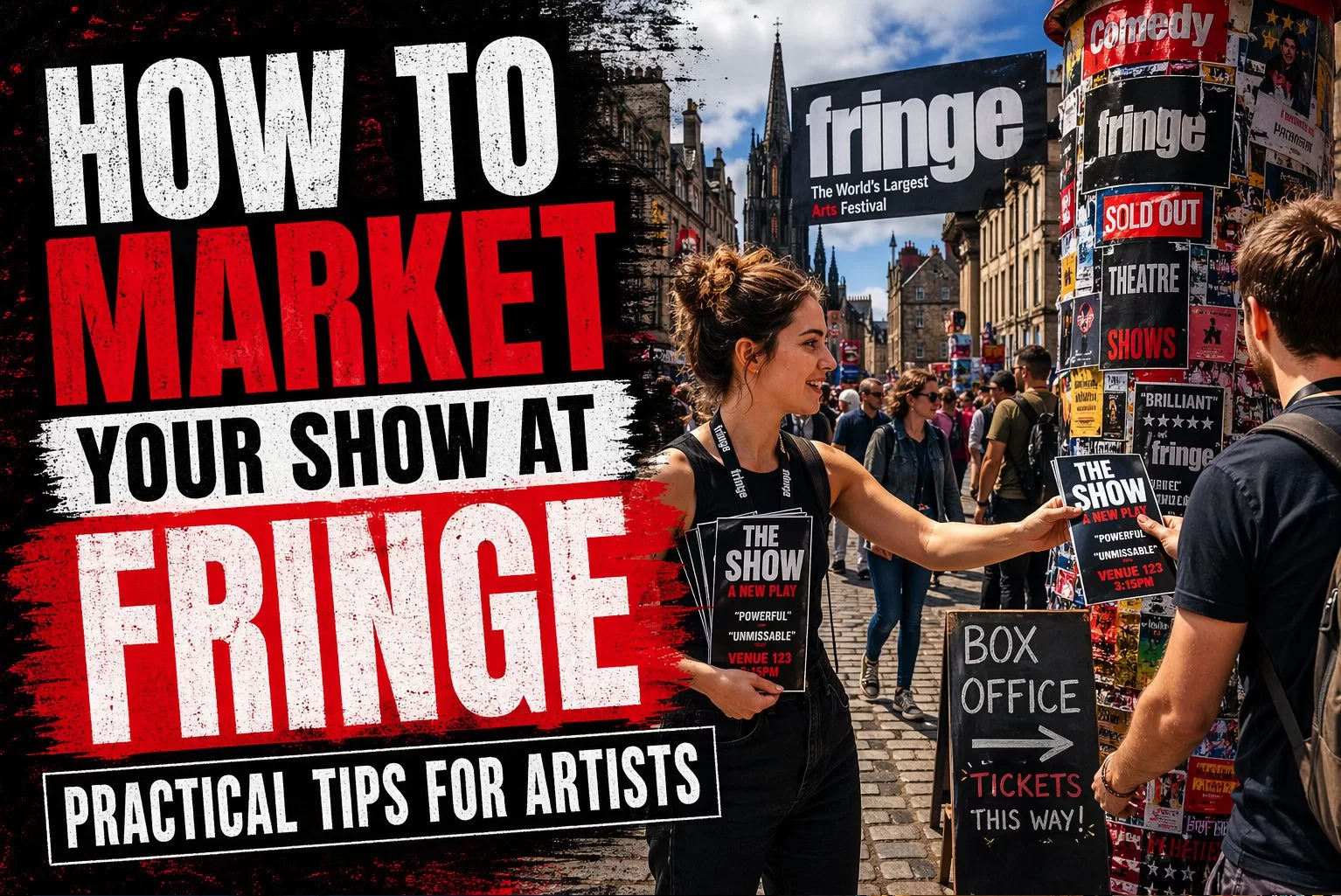
Bringing a show to the Edinburgh Fringe is exciting, ambitious, and expensive. It is also one of the most competitive performance environments in the world.
You are not just making art. You are launching a temporary campaign in a city filled with thousands of other artists trying to do the same thing at the same time.
That can sound intimidating, but it also means one very important thing: most Fringe marketing is not about having the biggest budget. It is about being clear, strategic, consistent, and realistic.
This guide is for artists, producers, and small companies bringing work to the Fringe and trying to answer the most practical question of all:
How do you actually get people into the room?
Start With the Right Mindset
One of the biggest mistakes artists make at the Fringe is thinking of marketing as something separate from the show. It is not. Marketing starts with understanding what experience you are offering and who it is really for.
If you cannot describe your show clearly, your marketing will struggle no matter how much money you spend.
Before you design a flyer, run ads, or start posting online, make sure you can answer these questions:
- What is the show in one sentence?
- Why should someone care?
- Who is the ideal audience for it?
- What makes it emotionally or artistically distinct?
- What expectation should the audience have before they walk in?
The Fringe is full of good work. The problem is not only quality. The problem is clarity.
Your Marketing Goal Is Not “Reach”
At the Fringe, artists often talk about “getting the word out,” but that phrase can be misleading. Visibility matters, of course, but visibility by itself does not sell tickets.
Your goal is not to be seen by everyone.
Your goal is to be seen by the right people, often repeatedly, until they decide to book.
That means your marketing should focus on three things:
- Recognition: people see your title, image, or name more than once
- Interest: they understand what kind of experience your show offers
- Action: they know where to book and why they should do it now
Everything you do should support one or more of those steps.
Know Who Your Show Is Really For
“Everyone” is not a Fringe audience strategy.
The more specific you are, the easier your marketing becomes. You do not need to exclude people. You just need a clearer starting point.
For example:
- A quiet two-hander about grief and time is not marketed the same way as a late-night absurd comedy
- A family show is not marketed like an intense psychological drama
- A piece for theatre lovers is not the same as a show built for tourists looking for a fun evening out
Ask yourself:
- Who is most likely to love this show?
- What other kinds of work do they already seek out?
- What words would they use to describe the experience they want?
- What problem are you solving for them? A laugh? An emotional experience? A conversation starter? A hidden gem?
The more precise your audience thinking is, the more effective your copy, visuals, pitching, and flyering will be.
Create a Show Description That Actually Works
One of the most important pieces of Fringe marketing is the short description. It appears in listings, on your website, on social media, in venue material, and sometimes in press outreach.
Most weak descriptions fail for one of two reasons:
- They are too vague
- They try to sound clever instead of being clear
A good Fringe description should do four things quickly:
- Tell the audience what kind of show it is
- Signal tone
- Create curiosity
- Sound different from everything else around it
It does not need to explain the entire plot. It needs to make the right person think: this might be for me.
When in doubt, prioritize clarity over mystery.
Your Poster and Thumbnail Need One Job
Many artists overcomplicate their visuals. At the Fringe, your image is usually being seen quickly, often on a small screen or in a crowded environment.
Your artwork does not need to explain the whole show. It needs to make someone pause long enough to read the title.
A strong Fringe visual usually has:
- A clear focal point
- Readable title treatment
- A strong mood or tone
- A design that still works at thumbnail size
Test your image in small format before committing. If it looks muddy or unreadable on a phone screen, it is not ready.
Build Your Marketing in Phases
Trying to market everything at once is inefficient. A better approach is to think in phases.
Phase 1: Before the festival
This is where you build awareness and lay the groundwork.
Focus on:
- Show page or landing page
- Strong listing copy
- Social media presence
- Press materials
- Email outreach
- Audience education if your show needs context
Before people book, they often need to understand what the show is and why it matters.
Phase 2: The opening days
This is where momentum starts.
Focus on:
- Flyering
- In-person pitching
- Filling early houses
- Capturing reactions and content
- Getting audience feedback fast
Your early audiences are not just ticket buyers. They are the people who may start your word-of-mouth cycle.
Phase 3: Mid-run and later
Now the goal is to sharpen what works.
Focus on:
- Using reviews or quotes if you have them
- Doubling down on the audience that is responding
- Updating copy to reflect actual reactions
- Promoting urgency and remaining performances
Fringe marketing gets stronger when you stop guessing and start noticing patterns.
Your Website or Landing Page Matters More Than You Think
Even if most of your booking happens through official channels or your venue, you still need a page you control.
That page should make it very easy for someone to understand:
- What the show is
- Why it is worth seeing
- Where and when it plays
- How to book
A good Fringe landing page usually includes:
- Title and strong headline
- One compelling show image
- Brief clear description
- Dates, venue, and runtime
- Direct ticket link
- Any social proof you have
- Trailer or teaser if useful
Do not overload it. The job of the page is not to impress people with complexity. It is to reduce friction.
Use SEO to Capture Discovery Before the Festival
Many artists underestimate how useful search content can be. If people are actively searching for information about the Fringe, theatre recommendations, emotional shows, hidden gems, or first-time tips, there is an opportunity there.
Instead of only posting promotional content, publish helpful content around the questions audiences are already asking.
Examples of useful article topics include:
- What kind of theatre is worth seeing at the Fringe?
- How do you choose what to see at the Fringe?
- How many shows can you see in one day?
- What should first-time Fringe audiences know?
- What makes a show emotionally memorable at the Fringe?
This kind of content helps people discover your show indirectly. It also positions your company as useful and thoughtful, not just self-promotional.
Social Media Should Support the Show, Not Replace the Show
One of the biggest traps artists fall into is spending so much time making content that they forget the content is supposed to support ticket sales.
You do not need to be everywhere. You need a repeatable system.
A simple and sustainable social media plan usually works better than trying to chase trends all month.
Good Fringe social content often includes:
- Clear announcement posts
- Short rehearsal or process clips
- Audience reaction quotes
- Behind-the-scenes moments
- Practical reminders: dates, venue, booking link
- Posts that explain what kind of experience the show is
Use repetition. At the Fringe, people rarely act the first time they see something.
That means it is normal and necessary to talk about the same show from different angles many times.
Do Not Rely Only on Organic Social
Organic social media can help with visibility, but it should not be your only plan. Algorithms are inconsistent, and even strong content often reaches only a fraction of your audience.
Think of social media as one channel among several:
- Official listings
- Your website
- Press
- Flyering
- Word of mouth
- Venue ecosystem
The more channels support the same message, the stronger your overall marketing becomes.
Email Is Still One of the Strongest Tools
Artists often ignore email because it feels less exciting than social media, but email remains one of the best ways to reach people who are already interested.
If you have a mailing list, use it.
If you have access to partner organizations, previous audiences, venue supporters, or local networks, reach out clearly and early.
A useful email sequence might include:
- Announcement email
- Why this show / why now email
- Opening week reminder
- Mid-run update with audience response
- Final weekend urgency email
Keep the emails focused. Each one should have a simple message and one clear call to action.
Flyering Still Matters—But Only If You Do It Well
Flyering at the Fringe has a mixed reputation, often because so much of it is done badly.
A flyer is not just paper. It is an invitation to a conversation.
Good flyering is not about shoving the maximum number of flyers into the maximum number of hands. It is about spotting the people most likely to be interested and giving them a reason to care.
Better flyering usually means:
- Being friendly, not aggressive
- Pitching clearly in one or two sentences
- Adjusting your approach depending on the audience
- Knowing your nearby competition and context
- Targeting areas where your audience already is
If your pitch is long or confusing, it is too long.
You should be able to explain your show naturally in under ten seconds.
Flyer Design Should Help the Conversation
Your flyer should support your pitch, not replace it.
At minimum, it should communicate:
- Show title
- Time
- Venue
- What kind of show it is
- Why someone might care
Do not overfill it. People are often looking at it while walking.
Make it fast to read and easy to remember.
Choose Flyering Locations Strategically
Not every high-traffic location is equally useful. The question is not just “where are the most people?” It is “where are the right people?”
Some useful options include:
- Outside your venue before similar shows
- Near other venues with related programming
- Central festival areas at the right times of day
- Spaces where audiences are already waiting and open to conversation
If your show is a thoughtful drama, you may do better outside theatre-heavy venues than in generic comedy-heavy traffic zones.
Train Everyone on the Same Pitch
If multiple people are promoting your show, consistency matters.
Everyone should know:
- How to describe the show in one sentence
- What makes it stand out
- Who it is for
- What comparisons help and what comparisons hurt
- What the practical booking details are
Confusing mixed messaging weakens trust.
Street Pitching Is Different From Press Copy
Many artists use the same wording everywhere, but different contexts need different language.
Your official description might be elegant and polished. Your street pitch needs to be immediate and conversational.
Your flyer copy might be short and hook-based. Your website copy can be a little fuller. Your reviewer email should focus on relevance and professionalism.
The core message should stay consistent, but the wording should adapt to the format.
Reviews Can Help, But Do Not Build Your Whole Strategy Around Them
Reviews matter at the Fringe, but they are not guaranteed, and they are not the only path to success.
Yes, a strong review or award mention can create momentum. But many shows still sell through audience response, venue visibility, good timing, and clear word-of-mouth.
If you pursue reviews, be strategic:
- Research reviewers who actually cover your kind of work
- Keep your outreach short and professional
- Make it easy for them to understand your show and schedule
- Do not mass-spam everyone
And if you do get good coverage, use it intelligently. Pull short quotes. Add them to social posts, your flyer if possible, your website, and your sales conversations.
Audience Reactions Are Valuable Marketing Assets
You do not need a major review to create social proof.
Audience reactions can be just as powerful, especially for smaller companies.
Ways to capture them include:
- Short video reactions after the show
- Written comments
- Instagram story tags
- Direct quotes from audience conversations
Sometimes the most persuasive line is not from a critic. It is from a real audience member saying exactly what the show made them feel.
Understand the Role of Word of Mouth
At the Fringe, word of mouth is one of the strongest forces you can have working for you.
People ask each other constantly:
- What have you seen?
- What was good?
- What surprised you?
- What should I book tomorrow?
Your job is to make it easy for people to recommend your show.
That usually means:
- Delivering a strong audience experience
- Being clear about what the show is
- Giving people language to describe it afterward
If audiences struggle to explain what they saw, your word of mouth becomes weaker.
Venue Context Is a Marketing Asset
Do not market your show as if it exists in isolation. Your venue matters.
People browse by venue. They trust venue brands. They cluster decisions around places they already plan to visit.
Use that.
If your venue has a recognizable identity, reference it where useful. If your venue has similar work on the programme, position yourself within that ecosystem.
This can help audiences understand whether your show is likely to fit their taste.
Timing and Scheduling Affect Marketing More Than People Admit
A show’s time slot changes the entire marketing strategy around it.
An 11am performance is marketed differently from a 9:30pm one.
Think about:
- What kind of audience is available at that time?
- What mood are they in?
- What other shows are surrounding yours?
- When should you flyer to catch them effectively?
The more you understand your schedule, the more targeted your outreach can become.
Marketing Should Continue Once the Festival Starts
Some artists prepare heavily before arrival and then assume the work is done once the run begins. In reality, marketing usually gets more important once the festival is live.
As soon as performances start, you gain new material:
- Audience reactions
- Photos
- New copy ideas
- Potential review lines
- Clearer understanding of who is responding
Use those signals quickly. Fringe campaigns improve when they stay responsive.
Watch for What Is Actually Working
Pay attention to patterns during the run.
Ask:
- Which posts are getting engagement?
- Which flyer pitch converts best?
- What kind of audience is showing up?
- What language are audiences using after the show?
- Are certain days or times stronger than others?
Do not keep repeating strategies just because they were the original plan. Adjust when needed.
Urgency Matters More Near the End
As your run progresses, your messaging should shift.
Early in the festival, audiences need awareness and context. Later, they need urgency.
That means using language like:
- Final week
- Last performances
- Limited remaining dates
- Only a few chances left to catch it
Many people wait until later to decide. Give them a reason not to wait too long.
Do Not Measure Success Only by Awards or Sold-Out Shows
Of course sold-out houses are great. Reviews are great. Awards are great.
But Fringe success can look different depending on your goals.
For some companies, success may mean:
- Building a new audience
- Making industry connections
- Testing a show in front of real audiences
- Creating future touring opportunities
- Learning what message resonates
Be ambitious, but also be realistic. The Fringe is a campaign environment. Every performance gives you information.
A Practical Fringe Marketing Checklist
Before the festival:
- Clarify your audience
- Write strong show copy
- Create poster and flyer assets
- Build your landing page
- Prepare social content
- Prepare email outreach
- Research press targets
- Train your team on the pitch
During the festival:
- Flyer consistently
- Capture audience responses
- Post regularly
- Update messaging based on reactions
- Use any reviews or quotes quickly
- Watch what is converting
- Push urgency later in the run
Final Thought
Marketing a show at the Edinburgh Fringe is not about pretending your show is for everyone or shouting louder than everybody else.
It is about understanding the experience you offer, identifying the audience most likely to connect with it, and making it easier for them to say yes.
The artists who market well at the Fringe are not always the ones with the biggest budgets. They are often the ones who are clearest, most consistent, and most willing to adapt once the festival begins.
If your show is good, your marketing should help the right people find it.
That is the real job.