What Nobody Tells You About Edinburgh During Fringe
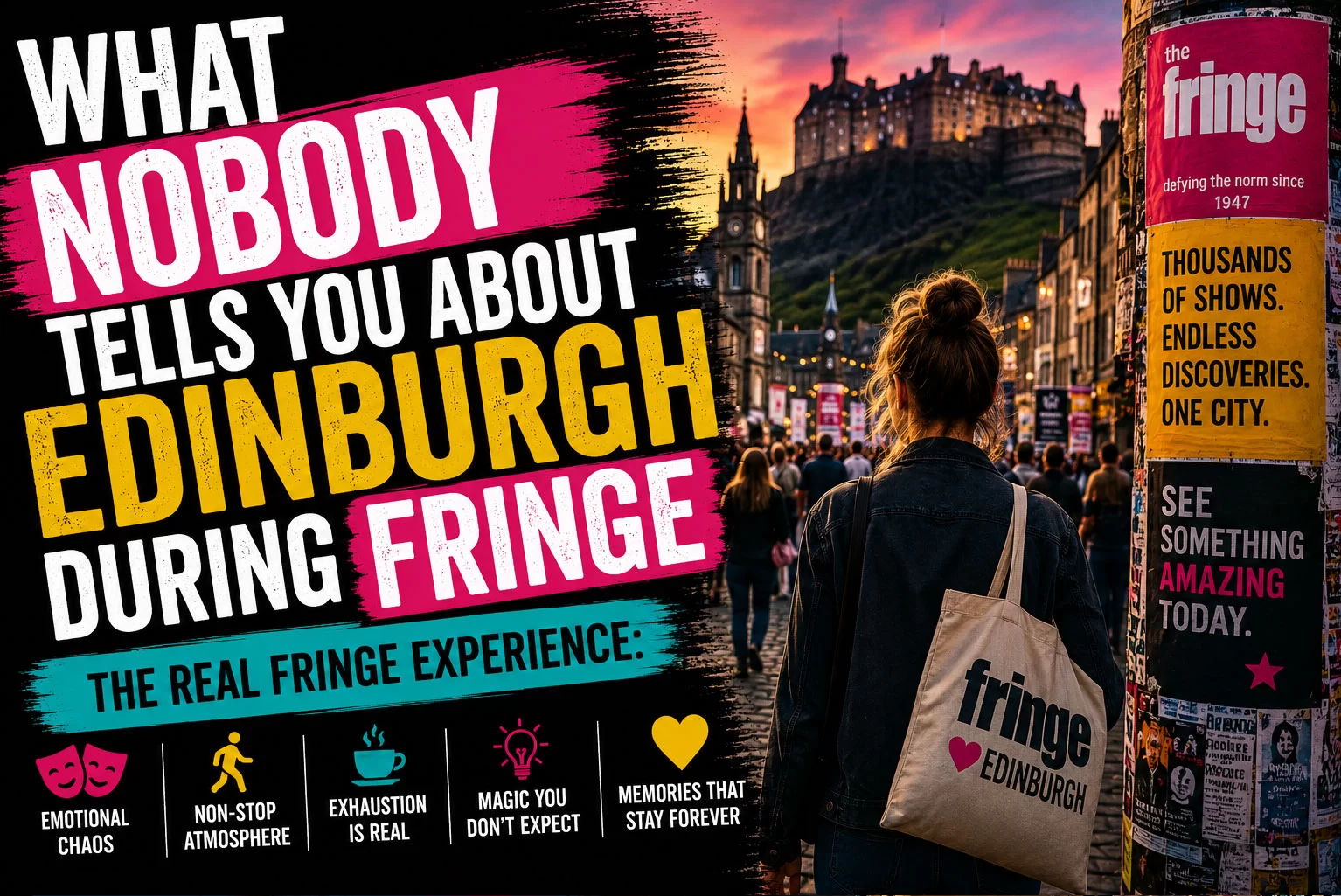
People tell you the Edinburgh Fringe is big.
They tell you there are thousands of shows. They tell you the city becomes crowded. They tell you to book accommodation early and wear comfortable shoes.
All of that is true.
But none of it really explains what Edinburgh actually feels like during the Fringe.
Because during August, Edinburgh stops feeling like a normal city.
It becomes something stranger.
More intense. More emotional. More exhausting. More alive.
And honestly, nobody fully understands it until they experience it themselves.
The City Feels Like It Is Running on Adrenaline
During the Fringe, the city develops a completely different rhythm.
Performers hand out flyers from morning until late at night. Audiences rush between venues carrying coffee, schedules, tote bags, and emotional damage from whatever devastating theatre experience they just witnessed an hour earlier.
The streets never seem fully quiet.
Even late at night, conversations about shows continue in pubs, outside venues, in stairwells, and on sidewalks filled with exhausted artists trying to survive another festival day.
After a few days, the Fringe stops feeling like an event and starts feeling like an alternate reality.
You Will Walk More Than You Expect
Everyone says Edinburgh is walkable.
What they forget to mention is that it is also extremely vertical.
The city is full of hills, staircases, crowded streets, steep shortcuts, and sudden elevation changes that slowly destroy your legs over the course of the festival.
And somehow you will still keep walking.
Because part of the Fringe experience is movement itself.
You walk between shows. Between emotional states. Between wildly different worlds happening inside tiny rooms only minutes apart from each other.
One hour you may be watching absurd comedy in a basement. The next, a deeply intimate contemporary drama inside a church space where the audience is close enough to hear every breath.
The Royal Mile Starts Feeling Slightly Unreal
At some point during the Fringe, the Royal Mile stops feeling like a normal street.
It becomes performance.
Flyers cover your hands faster than you can process them. Street performers gather enormous crowds within seconds. Music appears from every direction simultaneously.
Someone dressed as Shakespeare walks past a drag queen, a circus performer, and a comedian screaming into a megaphone while tourists attempt to figure out what exactly is happening.
And weirdly, after a few days, it all begins to feel normal.
That may be the strangest part.
The Festival Is Emotionally Exhausting
Nobody talks enough about Fringe exhaustion.
Not just physical exhaustion.
Emotional exhaustion.
You absorb so much stimulation every day: performances, noise, crowds, conversations, flyers, recommendations, reviews, emotional theatre, late-night energy, constant decision-making.
And because audiences often see multiple productions in one day, emotional whiplash becomes part of the experience.
You may leave an emotionally devastating play only to immediately walk into a chaotic comedy flyer crowd thirty seconds later.
The transition can feel surreal.
You may also enjoy:
- How Many Shows Can You See in One Day at the Edinburgh Fringe?
- 10 Smart Tips for Edinburgh Fringe First-Timers
Some of the Best Fringe Experiences Are Completely Unplanned
One of the biggest mistakes first-time visitors make is trying to control every hour.
The Fringe rarely works that way.
Some of your best memories may come from:
- a random flyer someone handed you
- a tiny venue you almost ignored
- a free late-night performance
- a conversation with strangers outside a theatre
- a show you knew absolutely nothing about
The Fringe rewards curiosity more than optimization.
And often, the productions with the smallest budgets create the strongest emotional impact.
Smaller Venues Change the Entire Experience
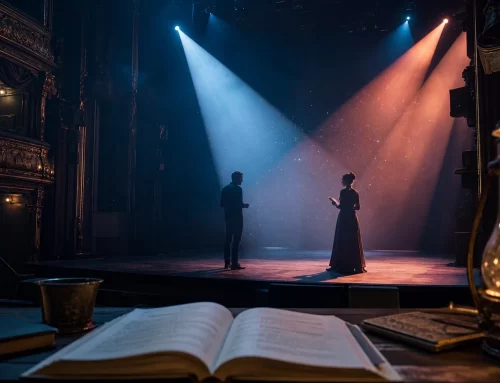
One thing people rarely understand before coming to Fringe is how intimate many venues are.
You are not sitting far away in massive commercial theatres.
Sometimes the actors are only a few feet away.
That changes everything.
Silence becomes louder. Eye contact becomes uncomfortable. Emotional moments feel immediate instead of distant.
This is one reason intimate theatre works so powerfully at the Fringe.
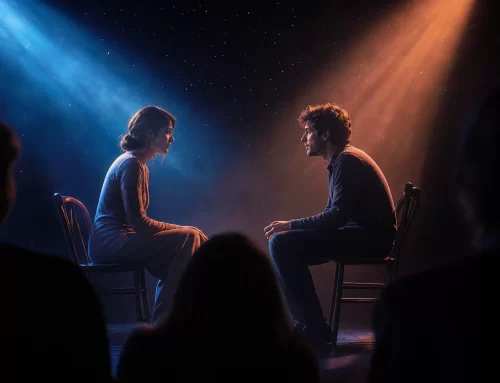
Productions like Theatre33’s Constellations at theSpace on the Mile thrive inside that kind of environment because the play depends on emotional proximity rather than spectacle.
The audience is close enough to feel every hesitation, every shift in energy, every unfinished thought.
You may also enjoy:
- Best Intimate Theatre Shows at Edinburgh Fringe 2026
- Best Emotional Shows at Edinburgh Fringe 2026
- Why a Two-Hander Can Hit Harder Than a Bigger Show
Time Starts Feeling Strange
After several days at the Fringe, normal time disappears.
You stop measuring your day traditionally.
Instead, time becomes:
- the 2pm show
- the gap before the 5pm show
- the late-night comedy slot
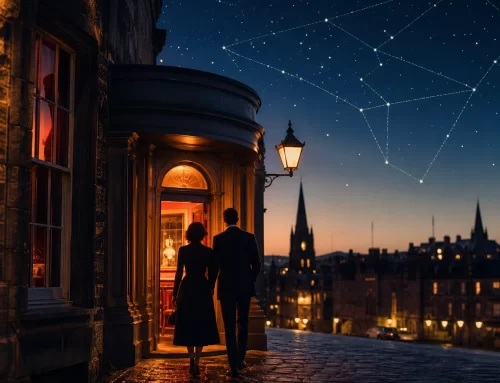
- the walk back through Old Town at midnight
- the emotional recovery period after a devastating performance
Days blur together in a way that feels strangely addictive.
And eventually, you stop trying to fully keep up.
The Fringe Is Full of Contradictions
The Fringe is chaotic but intimate.
Overwhelming but inspiring.
Commercial and deeply personal at the same time.
You can watch world-class theatre next to productions held together almost entirely by passion and exhaustion.
Some artists perform to packed crowds.
Others perform for six people and still give everything emotionally.
That vulnerability is part of what makes the festival feel so human.
Edinburgh at Night During Fringe Feels Almost Cinematic
Late at night, after the crowds thin slightly, the city changes again.
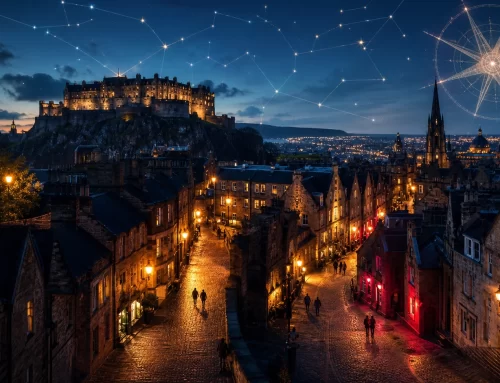
The streets glow differently. Conversations slow down. Performers sit outside venues still partially in costume. Audiences replay scenes from shows they cannot stop thinking about.
And somewhere nearby, someone is still handing out flyers for tomorrow.
There is a strange beauty to Edinburgh during Fringe that is difficult to explain without sounding dramatic.
But anyone who has experienced it usually understands immediately.
What People Remember Most
Years later, many people do not remember every show they saw.
What they remember is the feeling.
The exhaustion.
The emotional overload.
The city at midnight.
The tiny venues.
The unexpected discoveries.
The strange temporary community created by thousands of people all searching for something meaningful at the same time.
That is the real Fringe experience.
See Constellations at Edinburgh Fringe 2026
Theatre33 presents Constellations by Nick Payne at theSpace on the Mile during Edinburgh Fringe 2026.
Venue: theSpace on the Mile
Dates: 7–15 August 2026
Duration: 55 minutes
You may also enjoy:
- Ultimate Guide to Edinburgh Fringe 2026
- Edinburgh Fringe on a Budget
- Hidden Gems at Edinburgh Fringe 2026
Learn more and book tickets for Constellations at Edinburgh Fringe 2026