How Fringe Audiences Actually Choose Shows
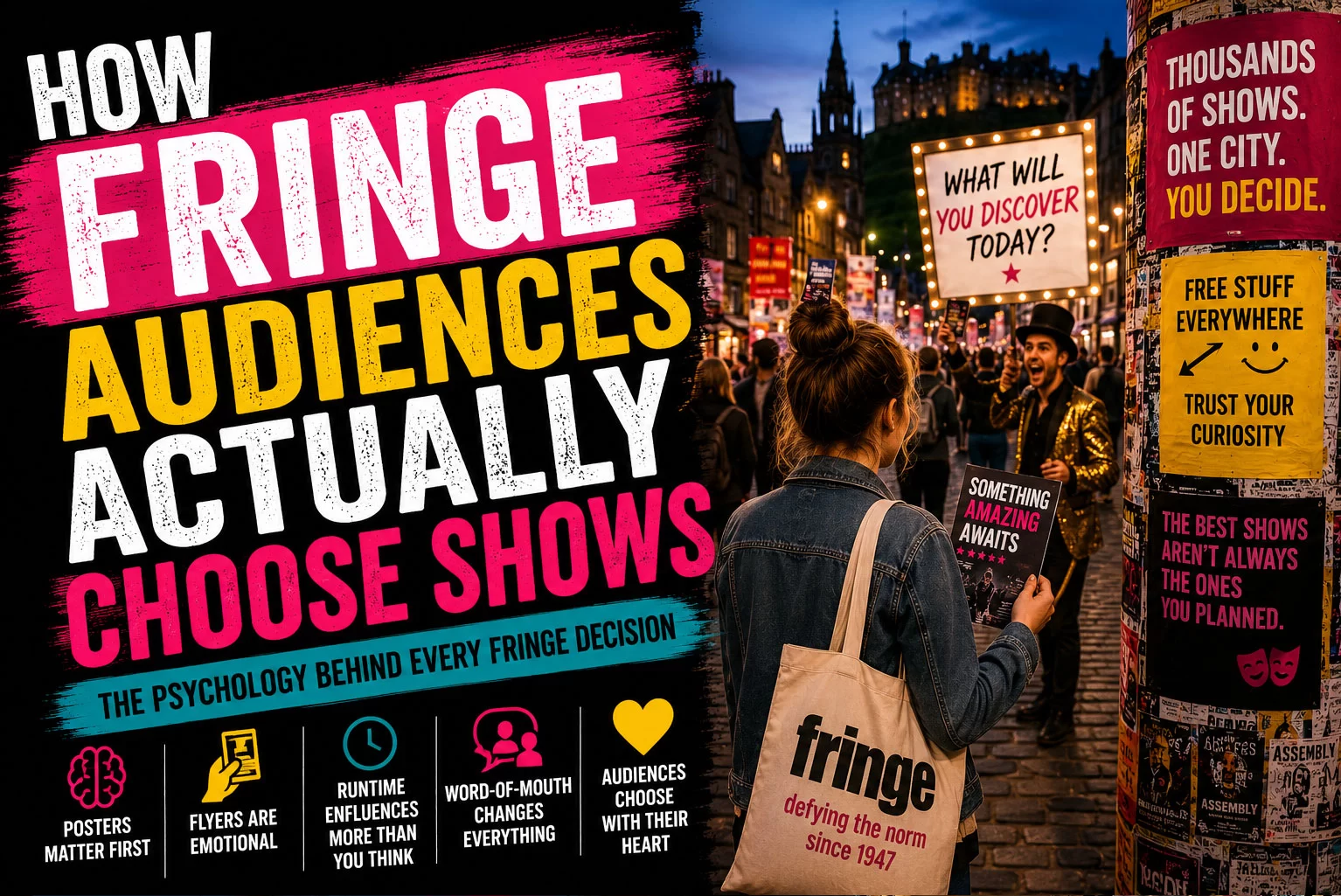
Before going to the Edinburgh Fringe for the first time, many people imagine they will choose shows logically.
They picture themselves carefully studying the programme, reading reviews, comparing genres, organizing schedules, and making strategic artistic decisions.
Then they arrive in Edinburgh.
And within two hours, someone dressed as a pirate hands them a flyer while another performer emotionally promises that their show “will change your life.”
Suddenly logic disappears.
Because the truth is: most Fringe audiences do not choose shows rationally.
They choose emotionally.
And the longer they stay at the festival, the more instinctive those decisions become.
The Fringe Creates Decision Overload Almost Immediately
One of the defining experiences of the Edinburgh Fringe is overwhelming abundance.
Thousands of performances happen across the city every single day. Comedy, drama, cabaret, musicals, experimental theatre, spoken word, circus, dance, immersive experiences — often happening simultaneously only minutes apart from each other.
At first, audiences attempt to plan everything.
But eventually, most people realize something important:
You cannot optimize the Fringe completely.
There are simply too many choices.
And ironically, that overload changes how audiences begin selecting shows.
Posters Matter More Than People Admit
Most Fringe audiences judge posters extremely quickly.
Sometimes in less than two seconds.
Color, typography, emotional tone, facial expression, simplicity, confidence — all of it influences perception immediately.
Audience members rarely stop and consciously analyze why one poster stands out more than another.
They simply feel drawn toward certain productions instinctively.
At the Fringe, posters do not just communicate information.
They communicate emotional expectation.
Audiences often decide whether a show feels:
- serious
- chaotic
- intimate
- smart
- safe
- emotionally risky
- commercial
- human
before reading a single sentence.
Flyers Are Less About Information and More About Energy
Many first-time Fringe artists assume flyers work because audiences carefully read them.
Usually, they do not.
Flyers work because of energy, confidence, emotional framing, and human interaction.
The way someone hands you a flyer often matters more than the flyer itself.
Audiences respond to:
- genuine enthusiasm
- clarity
- confidence without desperation
- strong emotional hooks
- simple memorable concepts
And honestly, audiences become surprisingly skilled at sensing authenticity.
At the Fringe, people are constantly being sold something. Productions that feel emotionally honest tend to stand out faster than productions trying too aggressively to impress.
Runtime Quietly Influences Huge Numbers of Decisions
One thing many audiences never admit openly:
runtime matters.
A lot.
At a festival where audiences may see multiple productions per day, shorter runtimes often feel psychologically safer.
A 55-minute show feels easier to commit to than a three-hour production during an already exhausting Fringe schedule.
This is one reason intimate contemporary theatre often works so effectively at the festival.
The pacing feels concentrated. Focused. Emotionally immediate.
You may also enjoy:
- Best Short Shows at Edinburgh Fringe 2026
- How Many Shows Can You See in One Day at the Edinburgh Fringe?
Word-of-Mouth Becomes Extremely Powerful
As the festival progresses, audience behavior shifts.
People stop relying entirely on listings and start relying on conversations.
At the Fringe, recommendations spread quickly:
- “You need to see this.”
- “I cannot stop thinking about that show.”
- “That was way better than I expected.”
- “Nobody is talking about this production enough.”
Sometimes a production suddenly explodes because enough people start talking about it emotionally.
And often, those recommendations feel more trustworthy than official marketing.
Venue Reputation Quietly Shapes Audience Choices
Even audiences unfamiliar with theatre begin recognizing venue identities surprisingly quickly.
Certain venues develop reputations for:
- experimental work
- serious drama
- emerging artists
- comedy
- high-production-value theatre
- intimate storytelling
That reputation influences audience expectations before the performance even begins.
And smaller venues often create stronger emotional proximity between audiences and performers.
This is one reason intimate productions can feel especially powerful at the Fringe.
Exhaustion Changes Audience Psychology
After several days at the Fringe, people stop making decisions the same way.
Festival exhaustion changes audience behavior dramatically.
At first, audiences attempt to optimize every hour.
Later, instinct takes over.
People begin choosing shows based on:
- emotional mood
- energy level
- atmosphere
- gut feeling
- recommendations from strangers
- whether something feels emotionally different from everything else they already saw
This is why emotionally intelligent theatre often leaves such a strong impression during the second half of the festival.
Audiences become less interested in hype and more interested in authenticity.
Audiences Remember How a Show Made Them Feel
Weeks later, most people will not remember every flyer they received.
They may not even remember every plot.
But they will remember emotional impact.
They remember:
- the production that left the room completely silent
- the show they could not stop discussing afterward
- the performance that felt strangely personal
- the moment an actor looked directly at them
- the production that followed them emotionally back into the street
That emotional aftereffect matters enormously at the Fringe.
Why Intimate Theatre Often Stands Out
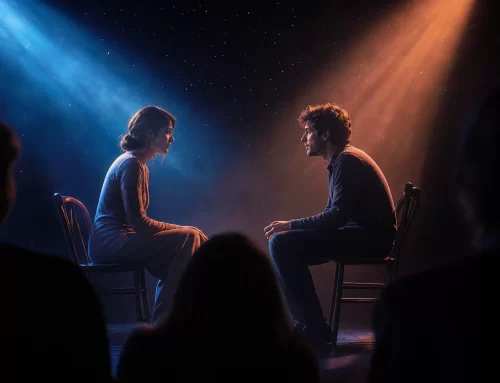
At the Edinburgh Fringe, intimate theatre experiences can cut through the noise in a very particular way.
Instead of relying on spectacle or scale, they create emotional closeness.
Productions like Theatre33’s Constellations by Nick Payne at theSpace on the Mile work especially well in the Fringe environment because the play depends on timing, vulnerability, emotional realism, and human connection rather than visual excess.
The audience is close enough to experience every hesitation and emotional shift almost in real time.
And in a festival environment filled with noise and overstimulation, that intimacy can feel surprisingly powerful.
You may also enjoy:
- Best Intimate Theatre Shows at Edinburgh Fringe 2026
- What Nobody Tells You About Edinburgh During Fringe
The Real Secret to Choosing Fringe Shows
The audiences who enjoy the Fringe most are usually not the people trying to perfectly optimize every minute.
They are the people willing to stay emotionally open.
To follow curiosity.
To trust instinct occasionally.
To take risks on smaller productions.
To let the city surprise them.
Because at the Edinburgh Fringe, the productions people remember most are often the ones they never planned to see at all.
See Constellations at Edinburgh Fringe 2026
Theatre33 presents Constellations by Nick Payne at theSpace on the Mile during Edinburgh Fringe 2026.
Venue: theSpace on the Mile
Dates: 7–15 August 2026
Duration: 55 minutes
Learn more and book tickets for Constellations at Edinburgh Fringe 2026