Why 55-Minute Shows Work So Well at Edinburgh Fringe
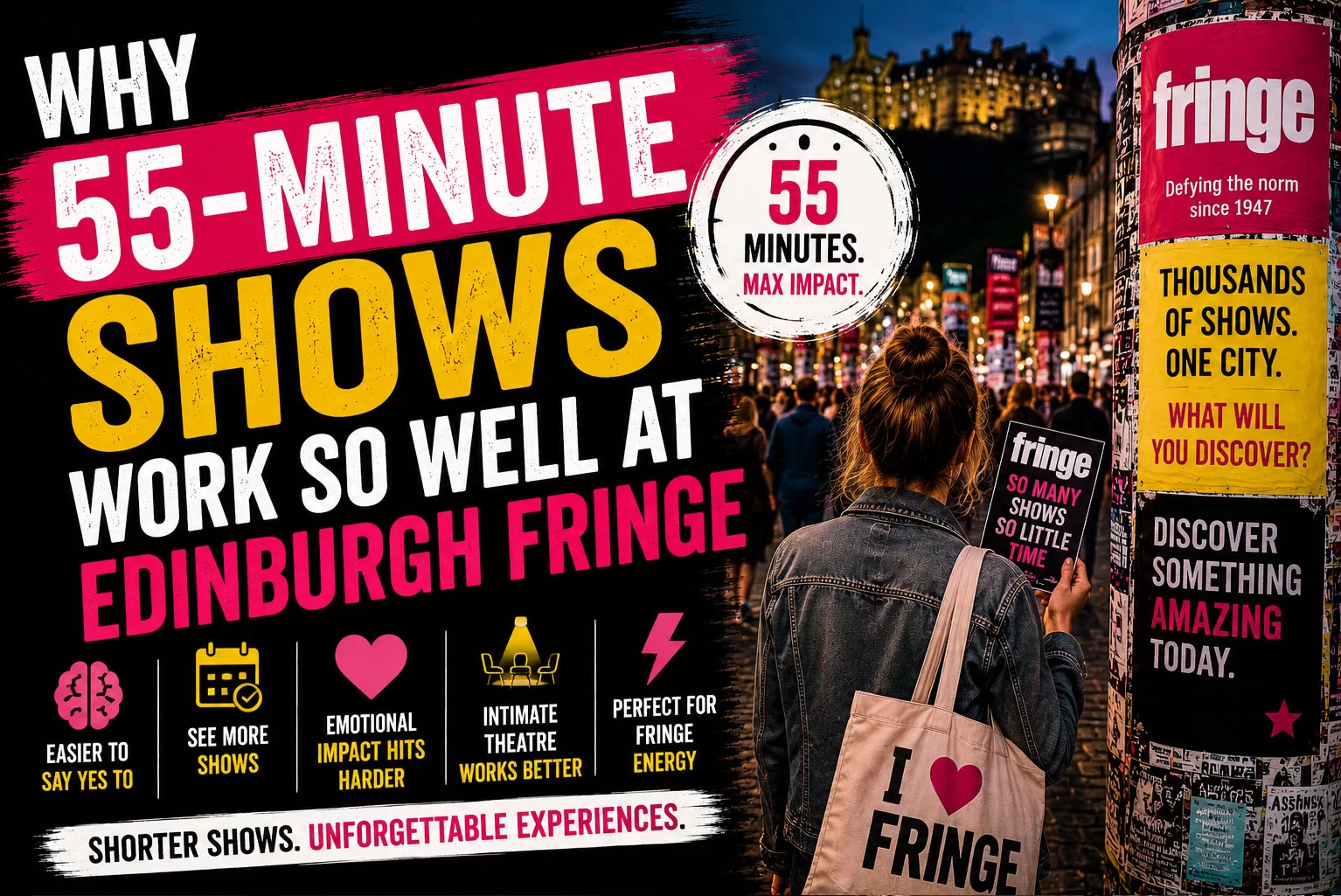
At first glance, a 55-minute theatre show might sound small.
Shorter. Lighter. Less ambitious.
But at the Edinburgh Fringe, something strange happens:
shorter productions often hit harder.
Not because audiences suddenly lose attention spans.
But because the Fringe completely changes how people experience theatre.
During August, audiences are not simply watching one carefully planned evening production.
They are navigating emotional overload, crowded streets, flyer chaos, exhaustion, scheduling pressure, and multiple performances per day.
Inside that environment, the concentrated emotional intensity of a 55-minute show can become incredibly powerful.
The Fringe Changes Audience Psychology
Outside the Fringe, audiences often approach theatre differently.
A two-and-a-half-hour evening production feels normal in a traditional theatre setting.
At the Edinburgh Fringe, however, audiences may see:
- three shows in one day
- five completely different genres in 24 hours
- a comedy followed by devastating drama
- a late-night experimental piece after an emotionally heavy matinee
That constant shifting changes audience psychology.
By the middle of the festival, people begin making decisions differently.
Runtime suddenly matters far more than they expected.
A 55-Minute Show Feels Easier to Say Yes To
One of the hidden truths of the Fringe:
audiences become commitment-sensitive.
Even if a three-hour production sounds brilliant, people start calculating:
- How far away is the venue?
- Will I still make my next show?
- Do I have energy left?
- Will I emotionally survive another epic today?
A 55-minute show removes some of that psychological resistance.
It feels manageable.
Flexible.
Audiences become more willing to take risks on productions they know less about.
And ironically, those spontaneous decisions often lead to the most memorable Fringe experiences.
Concentrated Theatre Can Feel More Intense
At the Fringe, shorter theatre often becomes sharper theatre.
There is less room for excess.
Less room for slow exposition.
Less room for scenes that do not emotionally matter.
The strongest Fringe productions frequently feel concentrated — emotionally compressed in a way that creates unusual intensity.
Audience members are pulled into the world immediately.
And because they know the experience is relatively brief, they often surrender to it faster.
The emotional pacing becomes different from traditional theatre.
Smaller Venues Make Shorter Shows Even More Powerful
One reason intimate theatre works so well at Edinburgh Fringe is because audiences are often physically close to performers.
Sometimes only a few feet away.
That proximity changes emotional impact enormously.
Silence feels heavier.
Small gestures become visible.
Emotional tension becomes difficult to escape.
Inside a tiny venue, a focused 55-minute production can feel almost overwhelming in the best possible way.
You may also enjoy:
- Best Intimate Theatre Shows at Edinburgh Fringe 2026
- What Nobody Tells You About Edinburgh During Fringe
Some of the Most Memorable Fringe Experiences Are Short
Many productions generating strong emotional reactions at recent Fringes have embraced tighter runtimes and focused storytelling.
Experimental works, contemporary dramas, solo performances, and emotionally concentrated pieces often thrive in the 50–70 minute range because they align naturally with Fringe energy.
Shows like Hater, blending trauma, rage, absurd comedy, and emotional unpredictability, or productions like A Public Display of Affection, which compress decades of queer history and emotional survival into an intimate solo experience, demonstrate how concentrated storytelling can create enormous impact.
Even large-scale productions appearing alongside the Fringe ecosystem, such as Angels in America or [seagull], gain much of their power through emotional immediacy rather than spectacle alone. ([Time Out Worldwide](https://www.timeout.com/edinburgh/theatre/best-edinburgh-festival-fringe-theatre-shows?utm_source=chatgpt.com))
The Fringe Rewards Emotional Precision
At the Fringe, audiences rarely remember every plot detail from every show they see.
What they remember is emotional aftereffect.
They remember:
- the room becoming completely silent
- the final image they could not stop thinking about
- the production that emotionally blindsided them
- the performance that felt deeply human
And shorter productions often create that impact extremely efficiently.
There is no time to emotionally drift.
The experience feels immediate from beginning to end.
Why Contemporary Drama Works Especially Well in This Format
Contemporary relationship dramas and intimate psychological theatre are particularly effective in the 55-minute Fringe format.
Because these plays depend less on spectacle and more on emotional rhythm, vulnerability, and human connection.
That intimacy becomes amplified inside the Fringe environment.
The audience is already emotionally open, overstimulated, exhausted, and searching for meaningful experiences within the chaos of the festival.
When a production connects under those conditions, it connects intensely.
Where Constellations Fits Into This
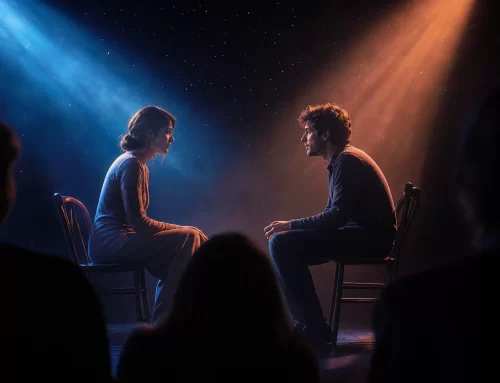
Theatre33’s production of Constellations by Nick Payne at theSpace on the Mile fits naturally into this uniquely Fringe-friendly format.
At 55 minutes, the production moves with emotional precision while still creating space for silence, hesitation, repetition, and vulnerability.
The play’s shifting parallel realities and fragmented conversations become especially powerful in an intimate Fringe venue where audiences are physically close enough to experience every emotional change almost in real time.
Rather than feeling “small,” the runtime makes the emotional impact feel concentrated.
You may also enjoy:
The Best Fringe Shows Rarely Feel Too Long
One of the strange lessons many Fringe audiences eventually learn:
the best productions rarely feel like they wasted your time.
Sometimes a devastating 55-minute experience leaves a stronger emotional imprint than a much larger production.
Not because bigger theatre is worse.
But because the Fringe rewards concentration, immediacy, emotional honesty, and risk.
And shorter theatre often understands that instinctively.
See Constellations at Edinburgh Fringe 2026
Theatre33 presents Constellations by Nick Payne at theSpace on the Mile during Edinburgh Fringe 2026.
Venue: theSpace on the Mile
Dates: 7–15 August 2026
Duration: 55 minutes
Learn more and book tickets for Constellations at Edinburgh Fringe 2026