Why Constellations Feels More Like Real Life Than Most Love Stories
Most love stories in film and theatre follow a familiar structure.
Two people meet.
Something pulls them apart.
Something brings them back together.
The audience leaves with closure.
But real relationships rarely work that way.
Real relationships are fragmented. Contradictory. Repetitive. Sometimes beautiful and painful at the exact same moment.
That is part of what makes Constellations by Nick Payne feel so different from most modern love stories — and why audiences often leave the theatre feeling like they experienced something uncomfortably real.
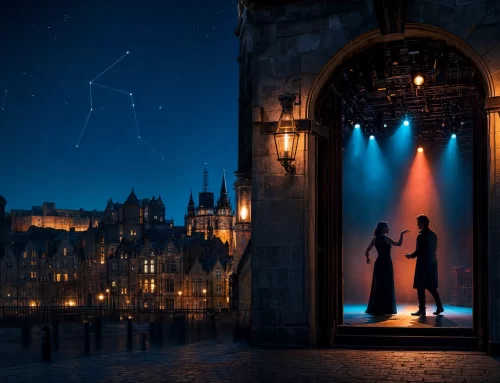
At the Edinburgh Fringe 2026, Theatre33 brings this intimate two-hander to theSpace on the Mile, where its emotional precision can land exactly the way the play demands: close, immediate, and human.
If you are new to the play, you can also read
What Is Constellations About?
or explore
whether Constellations is really a love story.
Love Stories Usually Simplify Reality
Most romantic stories are designed around emotional clarity.
Someone is “the one.”
A conflict appears.
A decision is made.
The ending tells us what everything meant.
But life does not usually provide that kind of certainty.
Sometimes the most important moments in a relationship are tiny: a sentence left unfinished, a hesitation before answering, a joke at the wrong moment, or a conversation repeated years later in a completely different emotional context.
Constellations understands this deeply.
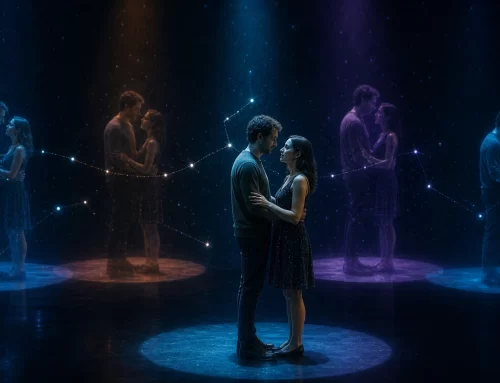
Instead of presenting one clean version of a relationship, the play explores multiple possibilities at once. Conversations repeat with slight variations. A different tone changes an outcome. A pause changes intimacy. A single choice redirects an entire future.
It feels less like watching a traditional romance and more like remembering your own life.
If you enjoy emotionally intimate theatre, you may also like our guide to the
best intimate theatre shows at Edinburgh Fringe 2026.
The Play Understands How People Actually Communicate
One of the reasons Constellations feels emotionally authentic is because the dialogue rarely sounds “written.”
The characters interrupt each other. They backtrack. They avoid difficult truths. They try again. They fail to say what they mean.
That rhythm feels familiar because it mirrors real human interaction.
Many contemporary love stories are built around dramatic declarations. Constellations is built around vulnerability, timing, and emotional misalignment.
Sometimes two people love each other completely and still cannot exist in the same emotional moment.
That idea sits at the heart of the play.
You can also read why many audiences describe the production as one of the
most emotional theatre experiences at Edinburgh Fringe 2026.
The Repetition Makes It More Human — Not Less
One of the most recognizable elements of Constellations is the repeated scenes.
At first, audiences sometimes assume this makes the play intellectual or abstract. In reality, it often has the opposite effect.
The repetition reflects how people actually live with memory.
We replay conversations in our minds. We imagine different outcomes. We wonder what would have happened if we had answered differently. We revisit relationships years later from another emotional perspective.
The structure of Constellations externalizes that process.
The play is not simply asking: “What if parallel universes exist?”
It is asking: “How many versions of ourselves exist inside memory, regret, love, fear, and possibility?”
That emotional question is what stays with audiences long after the show ends.
Curious about the structure of the play? Read:
Why Does Constellations Repeat Scenes?
Intimacy Is What Makes the Play So Powerful
Unlike larger productions filled with spectacle, Constellations depends almost entirely on emotional truth.
There are only two actors. No elaborate distractions. No massive set pieces hiding weak moments.
Every silence matters. Every glance matters. Every shift in energy matters.
That is why intimate theatre spaces are so effective for this play.
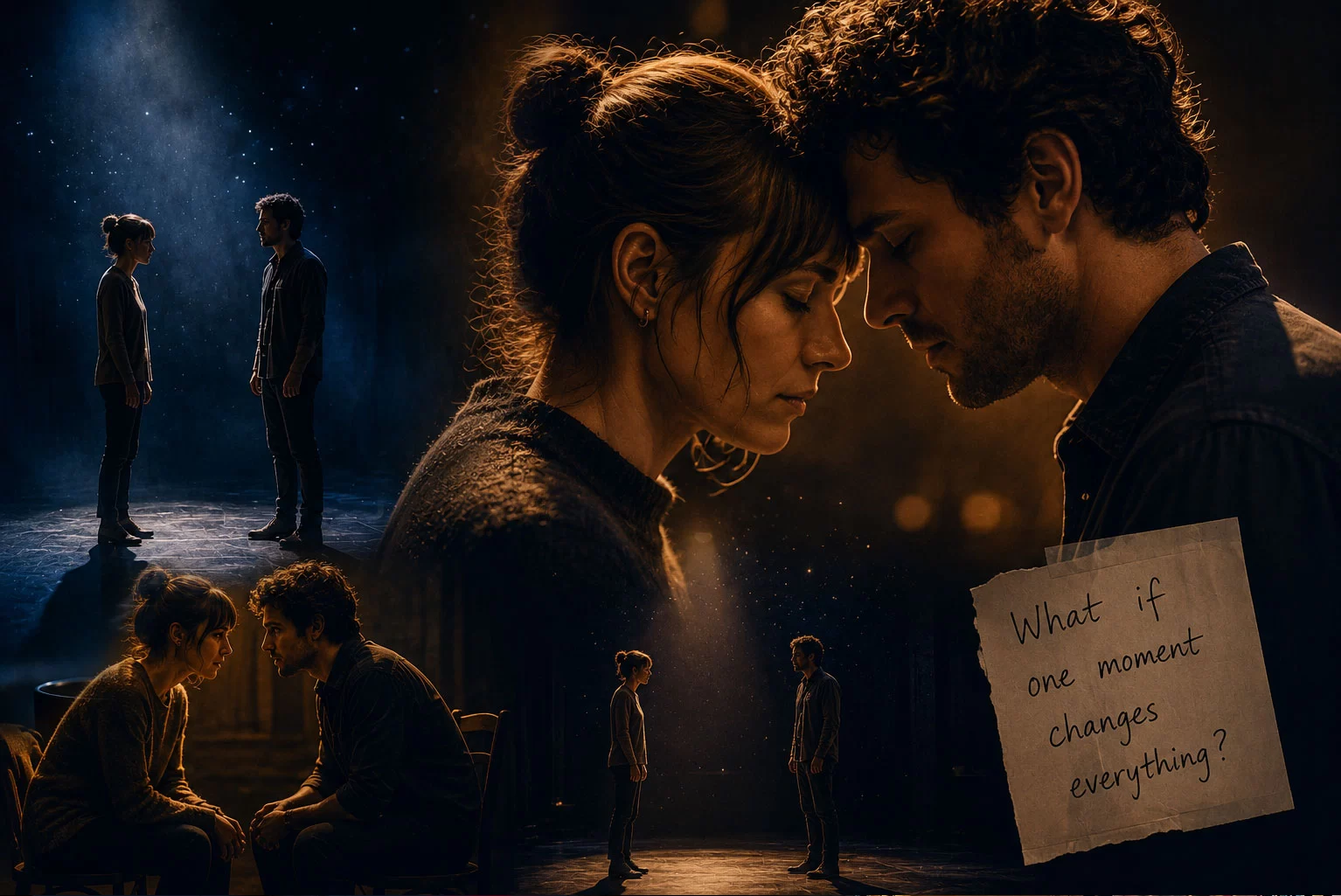
At the Edinburgh Fringe, where audiences are often only a few feet away from performers, Constellations becomes less like watching a story and more like witnessing private emotional moments unfold in real time.
Read more about why smaller productions can sometimes feel more powerful in:
Why a Two-Hander Can Hit Harder Than a Bigger Show.
Why Audiences Connect to It So Strongly
People often expect Constellations to be “about science.”
And yes, the play references quantum theory and parallel universes.
But the reason audiences connect to it has very little to do with physics.
People connect because the play understands uncertainty.
It understands timing. It understands missed opportunities. It understands how fragile relationships can feel. It understands how deeply human beings want connection — even when they fail each other.
That emotional honesty is rare.
And it is one of the reasons Constellations continues to resonate with audiences around the world years after its premiere.
Not sure whether the show is for you? You can also read:
Who Should See Constellations (And Who Probably Shouldn’t).
See Constellations at Edinburgh Fringe 2026
Theatre33 presents Constellations by Nick Payne at theSpace on the Mile during the Edinburgh Fringe Festival 2026.
Performance Details
Venue: theSpace on the Mile
Dates: 7–15 August 2026
Duration: 55 minutes
If you are looking for intimate theatre, emotionally intelligent drama, or a contemporary love story that feels startlingly real, Constellations may become one of the Fringe experiences that stays with you long after you leave the theatre.
You may also enjoy:
Why Constellations Stays With You After the Show
and
Looking for a Love Story at Edinburgh Fringe 2026?
Read more about the production and book tickets for Constellations at Edinburgh Fringe 2026.